
idalab reception

Working towards
the future
of healthcare

For our clients, we work exclusively on things that matter: new drugs, intelligent medical devices, better healthcare, green technology — and everything it takes to bring them to market.

Technology needs
strategy: learn both

To have an impact, AI must work in reality. This is where legal and regulatory, legacy infrastructure, commercial models, go-to-market and the general unpredictability of humans matter. We believe: progress is unlocked by individuals who can navigate that entire landscape

From internship
to partnership

As an independent consulting firm, we offer a unique career path that takes you all the way from an internship to becoming a co-owner of the company. Starting with hands-on tasks, you take full responsibility from day one.
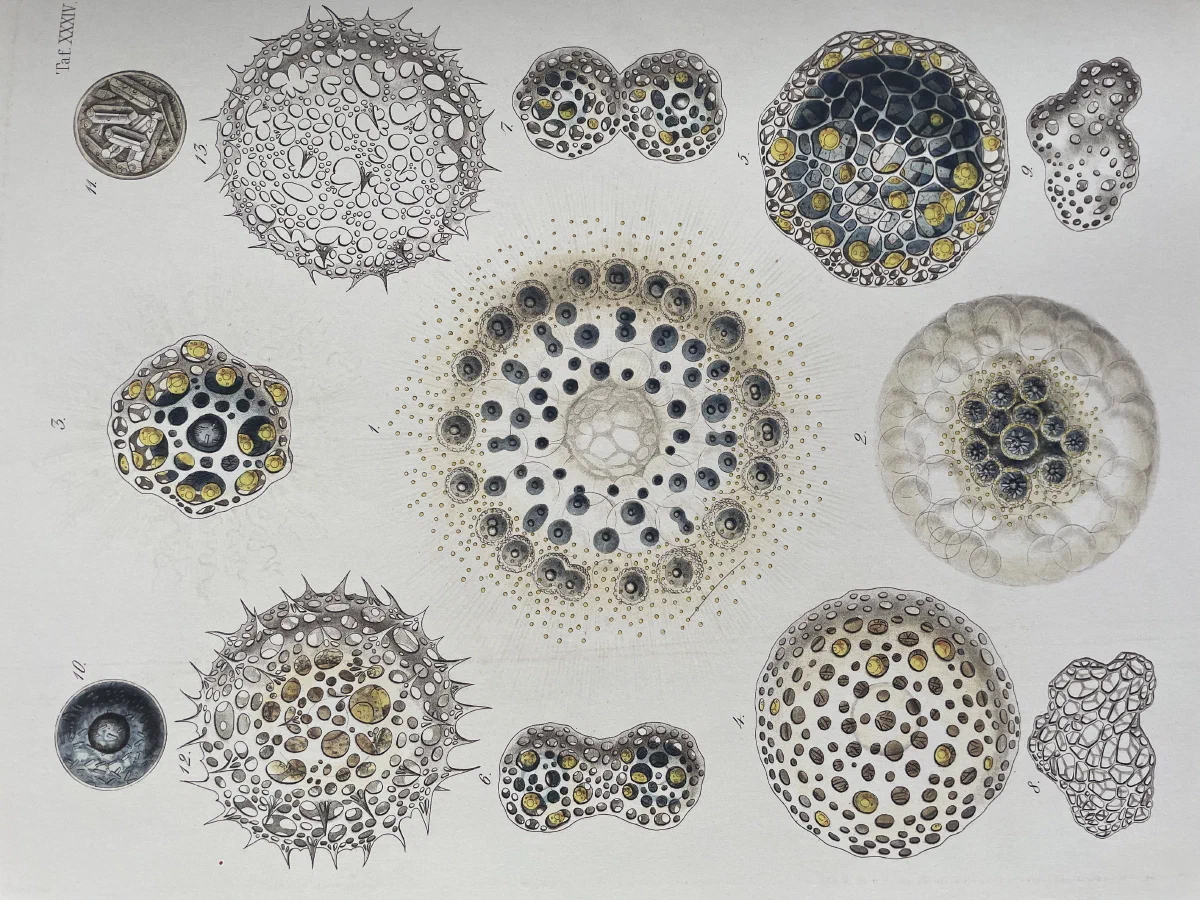
Haeckel specimen
Radiolaria. Microscopic single-celled organisms with mineral skeletons of intricate symmetry. Drawn by Ernst Haeckel — a biologist who insisted that science and art share an aesthetic sense, the same conviction that shapes how we approach our work.

Join us

We exclusively hire from our network of former interns. In our structured internship program (spring and summer), you will work on a project directly with our clients, supported by experienced mentors.

Interns may be invited to stay on as Student Trainees, continuing to work with us while studying.

To learn more about the internship program, join our our upcoming webinar. All questions answered, everyone is welcome.

Timeline

Summer Internship 2026

  • On-site interviews 18 May – 29 May
  • Internship 17 August – 18 September

Spring Internship 2027

  • Applications open 3 August – 18 September
  • On-site interviews 9 November – 20 November
  • Internship 15 February – 19 March

Spring Internship 2027

Do you want to make AI work for better healthcare? Explore roles beyond technical tasks? Then our Spring 2027 internship program is for you.

You will gain hands-on experience at the intersection of AI technology, healthcare and strategy consulting, working directly with one of our clients. As we hire exclusively from our network of former interns, this is your first step toward something bigger.

The internship runs for five weeks from February 15th until March 19th on-site in our office in Berlin.

What you will work on

In your internship, you will work on a 5-week consulting project for one of our clients, from kick-off to results review workshop. Guided by an experienced mentor, your tasks will include concept development, data analysis, software engineering, research, modeling and client communication. Projects will be assigned and tailored based on background, interest, and current priorities. The following is a list of selected past internship projects.
Past project topics
  • Therapy guidance for home dialysis patients using AI (2026)

    Client Multinational healthcare delivery company and medical device OEM

    Result Approach, technology landscaping, implemented prototype, evaluation, roadmap

  • AI-driven competitive intelligence for drug development pipelines (2025)

    Client Multinational pharma company

    Result Approach, dataset, implemented prototype, evaluation

  • Drug target identification in protein-protein interaction networks using Large Language Models (2024)

    Client Boston-based drug discovery startup

    Result Approach, dataset, implemented prototype, evaluation, target assessment report

What's in it for you

  • Expert mentorship & supportive culture

    Learn from senior colleagues in an environment that fosters learning and personal growth.

  • Paid

    Total compensation of €2,750 for five weeks (gross salary).

  • Training

    Sharpen your skills in AI, coding, strategic thinking, concept development and communication.

  • Grow your network

    Get to know a close-knit team and expand your network through our events and our alumni community.

Who we are looking for

We are looking for people whose academic background bridges two worlds: life science or healthcare combined with quantitative methods and software skills. This can come from interdisciplinary degree programs such as bioinformatics, medical informatics, computational biology or biostatistics; life science or healthcare degree programs with a quantitative focus such as health economics or pharmacology; or mixed paths such as physics followed by biology, or medicine combined with computer science.
  • We welcome applicants who are enrolled in an academic degree program at a university during the internship.
  • You are available to work with us 100% on-site in Berlin.
  • Strong communication skills as well as fluency in German and English is required.
  • You are excited about working in a client-oriented environment with a laser-focus on making a tangible real difference and a strong service mindset.
  • No previous consulting experience is required.

Apply until August 18.

Process
After a first screening, candidates are asked to complete three steps:
  1. Video interview

    Selected candidates will proceed to a video interview (max. 30 mins) where we want to learn more about you and answer all your questions.

  2. Case study

    In our case study, you can prove your conceptual and methodological skills. The case study takes approximately 8 to 10 hours and you will have a week to complete it. No prior experience in solving consulting case studies is required.

  3. Interview day (on-site)

    During the interview day, you will present your case study solution to the team and meet us in one-on-one conversations. We will get back to you with a decision within a week.

idalab is an equal opportunity employer; selection is based on individual merit alone. We are looking forward to receiving your application!

Frequently asked questions

Getting started

Can I also join part-time as a student (German Werkstudent:in)?

Yes! We offer a Student Trainee role which provides structured career development, exposure to clients, advanced training and opportunity to grow their network.

However, the first step is to join as an intern, there is no direct application to the student trainee role.

What are your language requirements?
Fluency in English and German is essential.
What is your home office policy?
We work predominantly from our office in Berlin. This is the best fit for the type of work we do and the nature of our organization. That said, there is some flexibility but we are not embracing home office.
How much workload is expected from students?
Your studies come first. That’s why we offer flexible hours, with a typical workweek of around 12 to 20 hours for student workers.
How can I learn more or get to know you before I apply?

Here are several ways to learn more about idalab, the internship program and experience our culture first-hand:

  • Join the all questions answered webinar
  • Contact any of the alumni or team members highlighted on this page for an informal chat
  • Join one of our events (idalab Seminar). You can also drop us a line and we’ll make time to meet you before or after the event.

What you will be doing

Are you developing software products?

Yes, we also develop software tailored for our clients. Depending on the nature of the application and the context, we may either focus on the “AI core” (backend) or choose to develop the entire application ourselves (backend and frontend).

However, we are not a product company, so we don’t develop software products that we sell to a broad range of clients.

Do you develop your own AI algorithms?

We focus on developing solutions addressing the needs of our clients. To do so, existing AI algorithms are some of the building blocks, but we rarely develop novel methodology from scratch.

However, our work almost always involves a lot of creative sophisticated quantitative modelling “around” standard algorithms, to address the actual problem at hand. This is an area that is largely out of focus within the AI research community, but no less intellectually challenging.

For example, imagine a scenario where you want to filter out irrelevant alarms in an intensive care unit based on real-time analysis of a patient’s vital sign data. In a typical machine learning approach, this task might be reduced down to a binary classification problem (relevant vs irrelevant alarms), which ends with an AUC that seems “high”. But this is just the beginning. How exactly does that classifier output translate into actions? Options include suppressing, prioritizing or delaying alarms — and possibly more. And how exactly does that result in better care, workflow efficiency, or cost reduction?

That entire process needs to be modelled quantitatively. How else can you decide, for example, whether it makes sense to invest time in increasing the AUC by 0.05? Which mode of intervention is the best? How to balance the different types of impact? Or for which patient segments, times of day, staffing cycles we need better data?

What do you mean by strategy work?

Broadly speaking, the goal of strategy work is to advise our clients on what to do in specific situations, often with high uncertainty. As such, the topics can vary widely, for instance:

  • Validating business models for AI opportunities
  • Developing technical realization strategies in the context of complex legacy technology landscape
  • Figuring out how to best position and communicate AI and data assets in preparation for an IPO
  • Due diligence of AI technology and teams
  • Organizational transformation of existing data functions towards AI product teams
  • Comprehensive AI strategy development
What is the balance between strategy work and solution development?
In terms of overall time spent, the split is roughly 30% strategy and 70% solutions. Most of our projects have both strategy and solutions work streams.

Growth & career

How does career progression work?

In our apprenticeship-to-partnership model, individual development isn’t just encouraged — it’s essential. We grow as a company only as much as our people grow.

Therefore, we have clearly defined career steps, a granular competence framework with transparent promotion criteria, fair and transparent salaries, supportive and open-minded mentors, regular feedback and training to support your development.

What is meant by a career path “from internship to partnership”?

Our organization and career path follows the classic apprenticeship-to-partnership model common among architecture and law firms, as well as strategy consulting and venture capital.

This means that, without exception, everyone starts with hands-on client work, then learns to manage complex projects, before ultimately developing their own speciality and client segments.

You can think of this as developing your own business as a part of idalab.

What kind of training do you offer?

Career progression is very important to us, which is why we’ve developed tailored in-house training programs, and prioritize time to do them. They’re designed to expose you early to the kinds of challenges and problems that most people only face after many years of experience.

Our training covers a wide range of areas, including:

  • AI methodology & statistics
  • Professional software engineering & architecture
  • Conceptual and strategic thinking
  • Communications (visual, written, oral)
  • Leadership, presence, impact

Culture and daily life

Do you have any team events and perks?

While we enjoy many team events and fun activities (not covered here), what truly sets us apart is the unique blend of knowledge-sharing and community spirit.

Every Friday, we come together to close the week with an internal talk, covering recent client projects, current research and organizational development. These sessions are also a great opportunity for you to practice public speaking skills in a casual, supportive environment. It’s all internal, no pressure, no clients, just a safe space to share your work, get feedback, and grow your confidence. Every month, we host a Tech & Croissant morning: our way of catching up over breakfast while exploring the latest developments in the tech world. Every Monday morning, in our weekly meeting, one of our team members shares their reflections on recent industry event: a technological breakthrough, research spotlight, legaslative development or a summary of a long-form essay.

Are you engaged with the community?
We love making connections at the intersection of AI and life science. We regularly host our idalab Seminar series with invited speakers, attend conferences, collaborate with the Berlin chapter of Nucleate, teach at university, sometimes even publish academic papers, and, every Christmas, collect money for the Schutzengelwerk.
How large are your project teams?
The typical number of people working on a single project range from two to four. Through the way we set up projects, we ensure that there’s always enough senior supervision for guidance and learning on the job.
How much travel is involved?
We mostly work from our Berlin-based office, but travel to our clients for workshops and important meetings. We also try to provide this opportunity for our student workers, however in practice this is rare and will not intervene with your studies.

Contact